

Every year, state DOTs face mounting challenges: keeping roads safe, managing tight budgets, and adapting to new policies and technology. 2026 is shaping up to be a pivotal year. With initiatives like the National Roadway Safety Strategy (NRSS) and the Safe System Approach (SSA) driving change, transportation agencies are under pressure to transition from reactive maintenance to proactive, data-driven solutions.
For decades, road maintenance has largely been a reactionary process — adjustments were made only when problem areas became too severe to ignore. Limited data, outdated tools, and budget constraints have made it difficult to get ahead of pavement deterioration before it leads to crashes and fatalities. Now, technologies like continuous friction measuring equipment (CFME), AI-powered analytics, and high-precision surface treatments are making proactive roadway management a reality.
Despite past progress, roadway safety remains an urgent issue. U.S. traffic fatality rates remain stubbornly high relative to long-term trends, and although fatality rates per vehicle mile traveled have improved, the country is still far from achieving the Safe System goal of zero traffic deaths. To bridge this gap, DOTs must embrace emerging trends in predictive maintenance, advanced analytics, and strategic infrastructure investments.
Here are the five most important trends shaping DOT maintenance in 2026 and beyond.
Historically, DOTs have relied on accident reports and fatality data to determine where road maintenance is needed. While this provides useful insights, it comes with a major flaw: it requires crashes to occur before safety improvements can be made. This approach is incompatible with zero-fatality safety goals and inefficient when it comes to long-term pavement management.
Continuous Friction Measuring Equipment (CFME) is leading the shift toward proactive maintenance. Unlike traditional Locked Wheel Skid Testers (LWSTs) — which collect data at intervals of every 60 to 100 feet and struggle with curves or intersections — CFME provides real-time, high-resolution friction measurements. The GripTester MK2, for example, captures a friction coefficient every 8 inches of travel. That level of precision allows agencies to pinpoint early signs of pavement deterioration and loss of traction long before they contribute to roadway hazards.
Proactive maintenance doesn't just enhance safety — it also reduces long-term costs by addressing issues before they require expensive overhauls. The combination of higher-resolution data and predictive analytics will allow DOTs to target maintenance efforts exactly where and when they're needed.
AI and Advanced Analytics in Roadway Safety
Artificial intelligence (AI) is reshaping industries, and transportation is no exception. The Transforming Transportation Advisory Committee (TTAC) has emphasized AI's potential to optimize infrastructure planning, streamline maintenance, and enhance roadway safety — but its success depends on access to high-quality, real-time data.
TTAC has recommended that USDOT:
- Expand and improve its data analysis capabilities
- Accelerate public data releases so insights remain actionable
- Increase collaboration between public and private sector stakeholders
Some agencies have already begun integrating AI-powered sensors into roadways and bridges to monitor real-time traffic loads, pavement wear, and environmental conditions. Over time, AI models can predict the ideal timing for repairs, balancing cost-effectiveness with infrastructure longevity.
For example, rather than relying on pre-scheduled manual bridge inspections, agencies can use AI-driven traffic data and wear sensors to automate maintenance scheduling. This shift would allow for precisely timed interventions — neither too early (wasting resources) nor too late (leading to emergency repairs). When scaled nationwide, these predictive capabilities could revolutionize how DOTs manage road networks, saving time, money, and lives.
Ready To Enhance Your Friction Testing Program?
Fill out the form and get a quote for a GripTester today. Our expert sales team will help you determine the right unit for your needs.
The Next Surface Transportation Authorization
The Bipartisan Infrastructure Law (BIL/IIJA) continues to fund core federal-aid highway programs through FY2026, including the Highway Safety Improvement Program (HSIP), which remains a key source of safety project funding. But with the IIJA's five-year authorization approaching its end, agencies are watching closely for what comes next.
Federal priorities have shifted toward:
- Strengthening national highway networks
- Improving freight efficiency
- Supporting economic and national security interests
"Buy America" provisions continue to play a major role in funding decisions, favoring projects that use U.S.-made materials. Contractors and agencies pursuing federal grants need to ensure their projects align with these priorities to secure funding.
Whether the next authorization expands, restructures, or trims existing programs, agencies that stay informed and align their projects with evolving federal priorities will be best positioned to compete for funding.
High Friction Surface Treatments & Texture Management
High Friction Surface Treatments (HFSTs) have been used for decades, but their adoption in highway safety has accelerated in recent years. These treatments provide a low-cost, rapidly deployable solution to enhance pavement traction, particularly in wet conditions or high-risk areas like curves, intersections, and high-speed corridors.
Despite their effectiveness, HFSTs must be applied strategically to maximize their impact. The best application areas are those with:
- Frequent braking action (intersections, sharp turns)
- High-speed conditions (freeways, on/off ramps)
- Wet-weather risks (low-lying or flood-prone areas)
Traditionally, DOTs have relied on crash data to determine where to apply HFSTs. Going forward, agencies will increasingly use friction testing technology to identify problem areas before accidents occur. This shift to proactive safety measures aligns directly with USDOT's zero-fatality vision.
Sustainability & Pavement Longevity Initiatives
Pavement longevity is a growing focus in state DOT planning as agencies seek cost-effective ways to extend roadway lifespans. The Transportation Performance Management (TPM) program emphasizes balancing maintenance costs with pavement durability, and DOTs are adopting innovative materials and preservation techniques to achieve that balance.
Key trends include:
- Long-life concrete pavement (LLCP): Lasting 50+ years with minimal maintenance
- Surface preservation methods: Chip seals, crack seals, and HFSTs to prolong pavement life
- Data-driven preservation: Using friction testing and AI to prioritize repairs more effectively
With federal funding shifting toward economic and national security concerns, agencies are likely to prioritize freight corridors and critical infrastructure over climate-driven initiatives. As funding tightens, cost-effective maintenance strategies will be essential to keeping roads in good repair without exceeding budget constraints.
The Road Ahead: How GripTester Helps DOTs Meet These Challenges
The trends shaping DOT maintenance in 2026 all point toward a future of data-driven decision-making. Whether it's proactive maintenance planning, AI-powered analytics, targeted HFST applications, or pavement longevity strategies, the key to success lies in having accurate, real-time data.
This is where the GripTester MK2 comes in. As a proven, FHWA-recognized CFME solution, the GripTester MK2 enables DOTs to collect high-resolution friction data, pinpoint surface issues before they become hazards, and maximize the lifespan of pavement assets. For curves, intersections, ramps, and other spot-check applications where a portable, walk-pace unit is more practical, the Micro GripTester delivers the same braked-wheel measurement principle in a compact, two-case format.
By integrating GripTester data into their maintenance strategies, agencies can:
- Identify friction loss before accidents occur
- Optimize maintenance schedules and resource allocation
- Extend pavement life and reduce long-term costs
As DOTs work toward zero fatalities and a more efficient, cost-effective roadway system, the GripTester provides the friction insights needed to turn those goals into reality.
Ready to add a GripTester to your DOT's friction testing program? Contact our team to find the right configuration for your road network.
Blog
Featured Articles

GripTester MK2 Buyers Guide
Safe runway operations are the most critical responsibility of any airport operations team, especially under wet conditions when aircraft braking and directional control are most at risk. The GripTester MK2 is one of the most trusted continuous friction measuring equipment (CFME) units on the market and is currently in service at more than 550 airports worldwide.
Top 5 Friction Measuring Devices In 2026
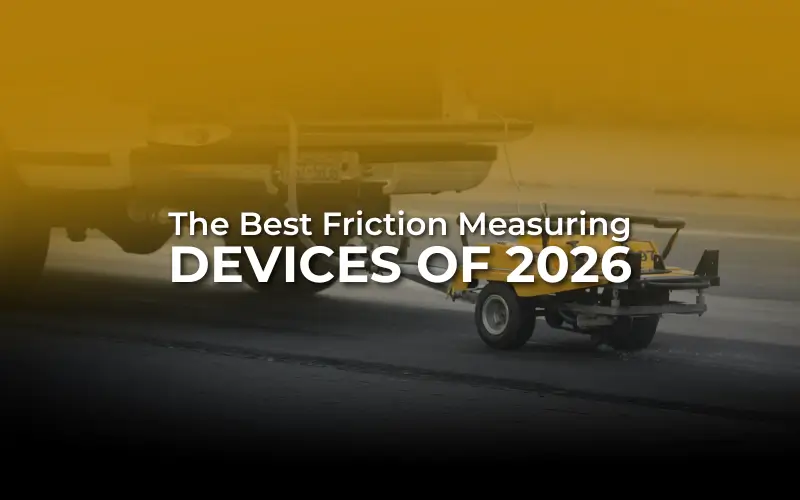
Selecting the right friction measuring device is critical for maintaining safety and performance standards on runways, roads, and racetracks. Understanding the strengths and weaknesses of each option ensures sound decision-making for pavement management. Here, we review the top 5 friction measuring devices available in 2026, evaluating each on its capabilities, limitations, and ideal applications.

What Is Continuous Friction Measuring Equipment?
Standard locked wheel skid testers (LWSTs) are limited in their ability to measure friction on curves and intersections, precisely where it’s most needed. To ensure safe, consistent traction on high-traffic roads, DOTs need a more precise, proactive solution. Enter continuous friction measuring equipment (CFME), a significant leap forward in friction measurement technology, with tools like the GripTester offering unmatched precision and reliability for real-time data.